Thursday, 18 January 2024

Craft book review - Sew Mindful Cross Stitch

I received a copy of this book in exchange for a review

Today I'm sharing a lovely new craft book - Sew Mindful Cross Stitch by Sophie Crabb. Cross stitch is one of my favourite crafts, and I've shared many of my cross stitch projects here on the blog, as well as some of my own designs. One of the reasons that I enjoy cross stitch is because it's a craft that I can really absorb myself in. The time flies by, and I love the feeling of accomplishment as a project comes together.

Cross stitch is definitely a mindful craft, and so I loved the idea of this book which aims to show the importance of crafting and the impact that it has on our mental wellbeing.

Sew Mindful Cross Stitch by Sophie Crabb book review

The book opens with a comprehensive introduction to cross stitching for beginners. Everything is covered - tools and materials required, the different types of thread and fabric, how to read a pattern, using hoops and frames and different stitching techniques. All the steps are fully illustrated to make it easy for complete beginners.

The book goes on to discuss the act of mindfulness, and some techniques for mindful cross stitching. I loved this section because it really emphasised to me how important it is to find an activity which can help you to switch off from the world and really relax and focus your brain on one thing. The first of the 22 projects in the book are small and ideal for beginners. The patterns are easy to follow, so you can really focus on how you feel as you are stitching, the feel of the fabric and thread and the sound of the thread pulling through the holes.

Sew Mindful Cross Stitch book review inside

The remaining projects in the book are grouped by theme - Positive Affirmations, Self-Care Stitches and Mindful Messages. Alongside each project the author has included a short paragraph explaining what the project means to her, which I found really interesting to read. There are so many designs in the book that it's easy to pick the ones which really resonate, and give you something to think about while you are stitching.

Sew Mindful Cross Stitch review

The book finishes with some tutorials for finishing off your cross stitch pieces so that they can be displayed. There were some really helpful tips, especially for when it comes to framing a piece in an embroidery hoop which I sometimes find tricky. 

I really enjoyed the opportunity to think a little more about how the mind and body link, and how mindful crafting can help to have a profound and positive impact on mental wellbeing. The projects in the book are simple yet effective and are perfect for beginners and more experienced cross stitchers alike. Even if, like mine, your cross stitching stash is too full at the moment to start new projects, it's also a really lovely read and gave me lots of things to think about. I'm definitely going to have a go at some of the smaller projects in the book first when I'm looking for a break from a larger piece!

Wednesday, 17 January 2024

Top five perks of going to a tech-free summer camp for kids

This is a collaborative post
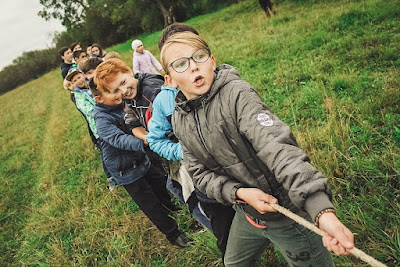
Children playing tug of war in a field
Photo credit Anna Samoylova via Unsplash

Ah, the digital age. It’s as if we’re in an ocean of screens. Kids nowadays are practically born with gadgets in their hands. It’s partly why parents are scratching their heads, wondering how to integrate modern technology with more conventional values. So, they send their kids to tech-free summer camps, where they swap screens for nature and learn valuable life skills.

Now, let’s get into five cool reasons why sending your munchkin to tech-free summer camps is smart. To be precise, we’re talking about a time when “offline” becomes an adventure, and spending time away from screens can cure boredom.

1. Digital Detox: Time to Unplug

Kids today are almost always on their gadgets. It can cause them to be addicted to technology, have shorter attention spans, and not spend enough time with real people. But there's a solution: tech-free summer camps! These camps allow kids to escape all that screen time and return to basics. They can hang out with their friends, relax, and have fun.  

Evaluating how to choose the right summer camp for your child is crucial when considering enrolling them in one of these programs. These camps include hiking, campfire tales, and team games. It allows children to embrace relaxation, unwind, and cultivate a more positive mindset, steering away from constant tech engagement. Picture a day when the harmonious sounds of laughter and chatter replace the usual digital pings and rings. Through this immersive experience, campers gain an appreciation for the natural rhythms of day and night, untouched by the artificial glow of electronic screens.

They experience the world with their senses – feel the coarse tree bark, the coolness of lake water, and the warmth radiating from a campfire under the starry sky. Here, children enjoy making fire and marshmallows while sitting around the winter night to share tales. 

In this technology-free environment, children can engage with their surroundings and each other, a skill often overlooked in our modern world of constant connectivity. This adventure is not just a break from technology; it's a return to the essence of childhood - fun, curious, and freeing.

2. Making Real Friends

The rise of instant messaging and social media has led to a decrease in the quality of friendships based on face-to-face interactions. Unplugged camps offer an opportunity to escape technology and form more meaningful connections. Picture your child swapping tales under the stars or building forts instead of tinkering on their phones. These instances equip them with social traits and make them understand the bliss of real-life relationships.

During camp, children can develop teamwork, communication, and sharing skills. Participating in simple games and activities can teach them the importance of teamwork, tolerance, and building solid relationships beyond the camp experience. These skills are crucial in everyday life, not just during summertime. Kids learn to communicate effectively at camp by listening, laughing, and resolving conflicts without using technology or other mediating devices.

In this environment, free from typical digital distractions, youngsters can develop new passions and learn new things about themselves and their camp friends. By understanding the experiences of others, they learn empathy and realize that each individual has a unique story. They make lifelong friends, united by nature and friendship despite their differences.

3. Unleashing Creativity

Kids today have limited opportunities to exercise their imagination due to structured screen time. Tech-free camps offer creative expression through painting, performing, game creation, and more. These activities teach children they can make amazing things without tech.

These camps provide a space for self-expression not limited to what is downloaded from a screen. Being in a tech-free environment encourages kids to explore new forms of communication through painting, dressing up, or creating their own games. They come to appreciate the thrill of turning their ideas into reality in any form, be it through a colourful painting, an impromptu play, or the beginning of a game based on their own concept.

Children not only learn arts and crafts but also problem-solving and improvisation skills as they develop an unlimited potential mindset. They start to appreciate their unique perspectives and contributions, realizing that creativity is not just about art but also how they approach the world. These moments of unrestricted creativity provide a foundation for creative thinking that will benefit them throughout their lives.

4. Getting Physical and Learning Outdoor Skills

It's a fact that we spend most of our time indoors or in the virtual world. That's why children need to engage in outdoor activities and stay physically active. Tech-free camps are designed to allow kids to be in nature and focus on fitness. They organize various activities like hiking, swimming, and canoeing, which not only help them enjoy themselves but also develop physical strength and appreciation for nature. Your child might even discover a new sport or activity they love, which is all about confidence and exposure to the great outdoors.

Every day at these camps is an exciting adventure. Your child can start their day with a refreshing swim in the lake, then participate in a nature scavenger hunt before spending time outdoors and learning how to set up tents.

It's not just about having fun; it's also about acquiring practical skills that foster a sense of competition and independence. There's no greater sense of accomplishment than reaching the top of a challenging climbing trail or navigating an unexplored river in a kayak. These adventures teach endurance, determination, and resilience.

In the great outdoors, children learn to appreciate the importance of preserving our natural resources, including animals' role in the ecosystem. They develop problem-solving skills and discover hidden strengths they never knew they had. These valuable experiences cannot be replicated through screen time.

5. Growing Independent and Tough

As a parent, you always want your child to be self-sufficient and confident. Tech-free camps offer an excellent opportunity for children to learn how to make their own choices. Children are responsible for their decisions and actions, from selecting the right hiking clothes to resolving conflicts with other campers. This helps them become more independent and learn how to solve problems independently.

Children learn that making mistakes and getting back up is a natural part of life. These lessons prepare them for the real world. In camps, children are exposed to various experiences that may make them uncomfortable. They could be in charge of leading a team, exploring uncharted territory, or facing unknown challenges without a safety net of technology.

This environment motivates campers to engage in reasoning, decision-making, and studying the consequences of their actions, whether positive or negative. The objective is to establish a sense of autonomy that they can carry with them beyond the summer camp. They learn the value of endurance, how to rely on their intuition and the importance of patience.

Moreover, overcoming these challenges in an environment that fosters a sense of togetherness enhances their self-assurance. They start considering themselves as capable individuals who can deal with any obstacle that comes their way. These are the fundamental aspects of resilience and independence - traits that will benefit them in various aspects of their life.

Children in rainwear running down a path
Photo credit Vitolda Klein via Unsplash

Wrapping It Up


It can be genuinely impactful to send your child to a tech-free summer camp. It's about giving them a fun summer experience and preparing them for the future.

At these camps, children get to enjoy a variety of activities that promote digital detox, healthy friendships, and unleashing their creativity. They engage in physical activities and personal development experiences that shape them into well-rounded individuals. Tech-free summer camps are an investment in your child's future, where they learn to balance technology with real-life skills.

Monday, 15 January 2024

The things that I need to survive the winter

The weather was quite mild over Christmas, but this week the temperature has definitely gone down. We even had some snow earlier in the week! I don't like it when the weather is cold, all I want to do is to snuggle up under a blanket, but I have discovered a few things over the years that help me to cope!

If I have to go outside, I can't go without my hat. It's only a cheap one from Primark and it's not particularly stylish or flattering but it is very warm and it definitely does the job. When I go out for a run I have a thick running jumper which also has some bright panels for visibility in the dark and I wear a headband that covers my ears. It's difficult to force myself out for a run, but once I get going I warm up quickly.

Around the house I wear an extra pair of thick socks over my normal ones. If I'm sitting in one place then I wear my Oodie which is fantastic, although a little bulky if I actually want to do anything. This year I bought myself a lighter zip up version from Primark which is still really warm but gives me a bit more movement in my arms!

Frosty hedge in front garden

I enjoy a hot drink to warm me up. I'm not a coffee drinker but I do like flavoured tea, especially berry teas which remind me of all the raspberry leaf tea I drank at the end of my pregnancies. I am also partial to a mid-morning hot chocolate, I like the Options range which comes in lots of different flavours. A hot lunch is always nice too, I love my soup maker or even a hot bagel or some cheese on toast. 

Last year we invested in an electric blanket and it was amazing. We use it while snuggled up on the sofa watching television and sometimes put it down on the bed before we go to sleep to make it nice and cosy. I never want to get out from under it!

Finally I like to have some projects to see me through the long dark evenings. At the moment I'm challenging myself to do some cross stitch every day so that I can make a real dent in my latest project. I also have a large jigsaw puzzle on the go, and I often pop up to bed early to read with a hot water bottle before my husband comes up.

I always find winter easier after Christmas, even though it usually gets colder at least there is the promise of warmer weather on the way!

Friday, 12 January 2024

A jigsaw challenge for the New Year - the 3000 piece Garden of Sun Signs from Ravensburger

Towards the end of last year I found myself getting back into jigsaw puzzles. I bought a couple of 1000 piece jigsaws with my birthday money, and got out some of my favourites to do again. I also started watching some puzzlers on YouTube, and that made me want to have a go at a larger and more challenging puzzle.

I spent a lot of time researching. I decided to go with a Ravensburger puzzle as I've completed many of their puzzles in the past and always found that they had a good variety of piece shapes that were enjoyable to put together. I settled upon 3000 for the number of pieces, mainly because any larger than that I just don't have the space. 3000 pieces forms a jigsaw that is about the size of my dining table. 

The design that I chose is called Garden of Sun Signs by Ravensburger (affiliate link). I kept a close eye on prices for a few weeks and found it reduced to around £34 on Black Friday which I thought was a good deal. It's an illustration of a garden filled with plants and trees, and contains a representation of each sign of the zodiac. I'm not particularly into astrology, I chose this puzzle because I liked the illustration style, the detail, and I thought that it had several areas which would be easy to separate and work on. There is a border on each side which looks quite distinctive, and plenty of variation in colour and texture.

Ravensburger Garden of Sun Signs 3000 piece jigsaw puzzle

I started the puzzle a couple of days after Christmas with a big sort of the pieces. It took me about two hours, and I made great use of the jigsaw puzzle sorting trays (affiliate link) which I received for Christmas. I sorted into two different types of edge pieces, internal pieces with a border section, pinks and purples, browns, blacks, and other interesting pieces.

Jigsaw pieces sorted into sorting trays

That left me with a lovely big box of other pieces which I put to one side!

Box of unsorted jigsaw puzzle pieces

I decided to start by working on the brown pieces. These are mainly found in the top half of the jigsaw along the top border. There are also some distinctive blue clouds which I had picked out in my initial sort. I soon discovered that most of the brown pieces were also linked to the large trees, so I decided to work on those as well.

This meant that I had to do another resort of the pieces to pick out all the tree branches. Then as my eye for finding the pieces that I wanted developed I went on to do a third sort through. These pictures show my progress so far after three sorts. As you can see, although I think I'm doing well with putting the pieces together I'm still missing a few pieces!

Garden of Sun Signs jigsaw in progress

These two sections connect together and along with a third smaller section in the bottom right they make up almost the whole top few rows of the jigsaw. For the time being I'm working on the two removable sections from my puzzle mat, as the dining table is currently in use for another project. I'd love to be able to spread it all out, but I know that this is a long term project and I can't justify taking up the whole table for months at a time!

Garden of Sun Signs by Ravensburger jigsaw in progress

I've now started working on the purple and pink rocky areas which mainly connect to what I already have in place. The tree branches were challenging but doable, however the rocky areas are much more difficult. There are very subtle colour and shape variations which help, but I'm mainly working by shape sorting and trial and error. I'm fairly confident that I've pulled out most of the pieces at least, but it's slow going when I'm only placing a few pieces each session. 

This is definitely a project which is going to occupy me for a little while yet!

Thursday, 11 January 2024

What to look for in an aesthetic dentistry clinic

This is a collaborative post

When looking for a potential medical practitioner, it’s important to do your research properly. While aesthetic dentistry isn’t always the result of a medical emergency, it’s still crucial that you find a provider with extensive experience in that specific dentistry niche. There are a few things that you should be aware of in your search - here’s what to look out for in an aesthetic dentistry clinic. 

Fully qualified

It should go without saying that all dentists, including those who deal with aesthetic procedures, must be fully qualified. Make sure that the dentist you’re considering has carried out training to an advanced level in the precise procedures you’re having carried out, in addition to a dentistry degree. In some cases, they’ll be operating on your mouth, and they must know exactly what they’re doing. 

Specific experience 

There are a wide range of different aesthetic dentistry procedures that you can have carried out. While a lot of dentists will have a broad level of experience and be able to help you out with whatever it is that you need, it’s important to make sure that they have experience with the exact procedure you’re looking to have carried out. Check on their website, looking at testimonials of people who had similar procedures carried out in the past.

Check out the results of their work

If you want to see what you can expect your work to look like, then take a look at their website. Lots of aesthetic dentists are proud of the work that they carry out, and will post before and after pictures of a range of procedures. Providers such as St Annes Private Dental Centre also often post links to their Google reviews; by taking a good look through some of these, you can get some kind of idea of the overall quality of service you can expect. 

Price

Aesthetic dentistry definitely isn’t something that you want to be cheap with. If these kinds of procedures aren’t done properly, they can weaken your teeth, potentially leading to serious future dental issues. That being said, some clinics can be incredibly expensive - as a result, it’s important to do your research. Be suspicious of particularly cheap service providers, but also make sure that you do enough research to make sure that you’re not being ripped off.

A thorough consultation

While you might know roughly what it is that you want to have done to your teeth, you’ll likely still have a lot of questions. Your dentist should be able to answer these questions and guide you towards appropriate solutions through a thorough consultation process. Be wary of any clinics that try to rush you into a specific procedure without going through your medical history and asking you what you want first - they should be able to address any uncertainties you have and put your mind at rest.

Aesthetic dentistry can have a really positive effect on your life. It’s important that you take the time to research potential clinics properly, so that you end up with a service that has the knowledge and experience to provide you with the results you deserve.

Two smiling women with perfect teeth

Monday, 8 January 2024

What is typography and how is it applied in art?

This is a collaborative post

Apart from being an element in other pieces, typography is, itself an art form, much like calligraphy and hand lettering. Like its close cousins, typography also uses the arrangement of text to draw specific emotional responses from readers.

In art, typography can be a foundational element—such as in the case of typographic posters or a supporting component as in illustration art prints and other kinds of art where text isn’t the main focus. Contemporary art and graphic design often features typography as a key ingredient as well, defining the look of everything from corporate logos to album covers.

Unlike many other art forms, however, the value of typography is often tied to functionality, specifically in use of words, letters, and punctuation. While it does explore the artistic possibilities of text, typography remains grounded in the practical aspects of communication, usually emphasising readability and clarity.

But even with its inherent limitations, the dynamism and applications of typography are practically limitless. 

Let’s explore some of the ways typography is used to elevate creative works:

Convey Mood and Emotion

Far from simply presenting written ideas, typography can be used to evoke specific moods and emphasise a full range of emotions. The fonts, styles, sizes, spacing, and colours are just some of the typographic choices an artist can make to add a layer of meaning to a given artwork.

For example, using bold typefaces may convey a sense of urgency or strength, while softer, flowing fonts can evoke a more tranquil mood. In any case, the choices an artist makes can help to further shape the meaning of the written message as well as the overall feel of the art piece.

In essence, typography helps text transcend its functional role, giving artists a powerful means of imbuing emotional resonance in a piece. Through deliberate typography choices, artists can inject more layers of emotion into their work, inviting viewers to not only read plain information but also to experience the piece on a more visceral level.

Typography examples

Enhance Composition and Layout

The physical forms of different fonts can be leveraged to give a composition more coherence and aesthetic appeal. Graphic artists often use typography to balance positive and negative space, integrate text seamlessly with imagery, and create a harmonious visual flow—sometimes even intentionally breaking grammatical rules to provide a stronger overall message. These kinds of thoughtful typographic choices can enhance the overall aesthetic appeal and readability of the art.

To facilitate the use of type in this way, artists will often consider each character to be as much of a visual element as illustrations, logos, and other design components. This holistic approach transforms letters, numbers, and punctuation marks into versatile design tools, each with a potential impact on the overall work.

Notably, typography can be used to help establish a visual hierarchy within an artwork. This use of typography is apparent in a wide range of applications, from movie posters to websites. Working together with other visual elements, well-designed text can be used to guide a viewer’s eye along an intended path, allowing for effective communication. Additionally, through the use of varying font sizes, weights, and styles, an artist can ensure that a viewer looks at certain pieces of information before anything else, thus allowing the entire piece to provide a structured experience.

Provides Cultural, Symbolic, and Historical Context

Typography often reflects different cultural and historical zeitgeists. Even without studying typography or graphic design, many laypeople will tend to associate certain font choices and layouts with certain time periods or cultural movements. By consciously incorporating specific fonts within a given context, artists can anchor their work in a particular era or make statements about contemporary design.

Related to the previous point, the cultural contexts underpinning certain typefaces can even be used to strengthen a piece’s overall thematic composition. For instance, using a blackletter typeface like Fraktur can elevate a piece that is intended to appear pre-modern or Germanic in a way that other widely used fonts like Impact or Times New Roman simply couldn’t.

Lastly, typography can be used as a symbolic element in art, adding layers of meaning to a piece’s message. Letterforms themselves can be manipulated or combined to create visual symbols, logos, or abstract representations. Artists may play with the literal and visual aspects of letters to convey messages that go beyond the literal interpretation of the words.

From Printing Press to Pixels

Typography is not a new art form by any means. Indeed, artists have been consciously using type design to elevate the meaning of both the written word and visual arts for almost as far back as the printing press. In the present day, current generations of artists continue to push against the perceived boundaries of typography to further expand our understanding of its capabilities and, consequently, our collective abilities to express meaning. 

As technology continues to advance and cultural landscapes evolve, the art of typography remains a dynamic force, honouring its historical roots while continuously branching out into uncharted territories. Whichever way our communication norms change, we’ll doubtlessly see typography’s application in art change with it.

My year in books - 2023

I track all the books that I read through Goodreads. I don't use it as a social network, or as a way to find new books, it's just an easy way to keep track of the books that I have read. I've only been using it seriously for the last three or four years, and more than once I've added a book to my To Be Read list only to discover that I've already read it! I also enjoy reading the comments on a book once I've finished it, although I very rarely leave my own reviews.

At the end of the year I love having a look at the My Year in Books feature which shows you all the books that you've read during the year along with a few stats. So I thought I'd share a little bit of my reading history from 2023! Click the link below to go to the full report. 

My Year in Books 2023 thanks to Goodreads

I read 96 books in 2023 which seems like an impressive amount! I don't like setting myself a goal of reading a certain number of books, because I think I would then be tempted to choose shorter or easier to read books. Some of the books that I've read this year have been long and challenging. In particular The Count of Monte Cristo by Alexandre Dumas, which was my longest read. It took me several weeks, and plenty of looking up chapter summaries to keep me on track, but it was a brilliant book and I loved reading it.


Goodreads year in books 2023

Goodreads also provides some other data about the books I've read. My average book length was 367 which sounds about right. I think that's towards the longer length of a book, but I do read a mixture of longer and shorter books. My most shelved was It Ends With Us by Colleen Hoover which I vaguely remember as being quite good but not outstanding. My least shelved was A Field Guide to Larking by Lara Maiklem which is an excellent little book but which I suspect doesn't have the same worldwide market.

Goodreads 2023 information

I share some of my favourite reads every couple of months or so on the blog. But having looked through my list, here are just a few of my favourites, which have stayed in my mind long after I finished them!

Cloud Cuckoo Land - Antony Doerr

The Book of Form and Emptiness - Ruth Ozeki 

The Count of Monte Cristo - Alexandre Dumas

The Prodigal Summer - Barbara Kingsolver

The School for Good Mothers - Jessamine Chan

Elon Musk - Walter Isaacson

Tomorrow and Tomorrow and Tomorrow - Gabrielle Zevin

Lessons in Chemistry - Bonnie Garmus

The Forgotten Letters of Esther Durrant - Kayte Nunn

I don't have any particular reading goals for the new year, although I would like to work my way through the To Be Read pile beside my bed which has grown since my birthday and Christmas. A large part of it is filled by War and Peace which I would love to read one day, maybe this is the year! I also have some books which I borrowed from the library during lockdown and loved that I've subsequently picked up in charity shops. I want to re-read them before I find a place to shelve them.

I've just started reading How To Kill Your Family by Bella Mackie which I'm loving, although it has drawn comments from my family members who usually don't pay any attention at all to what I'm reading!